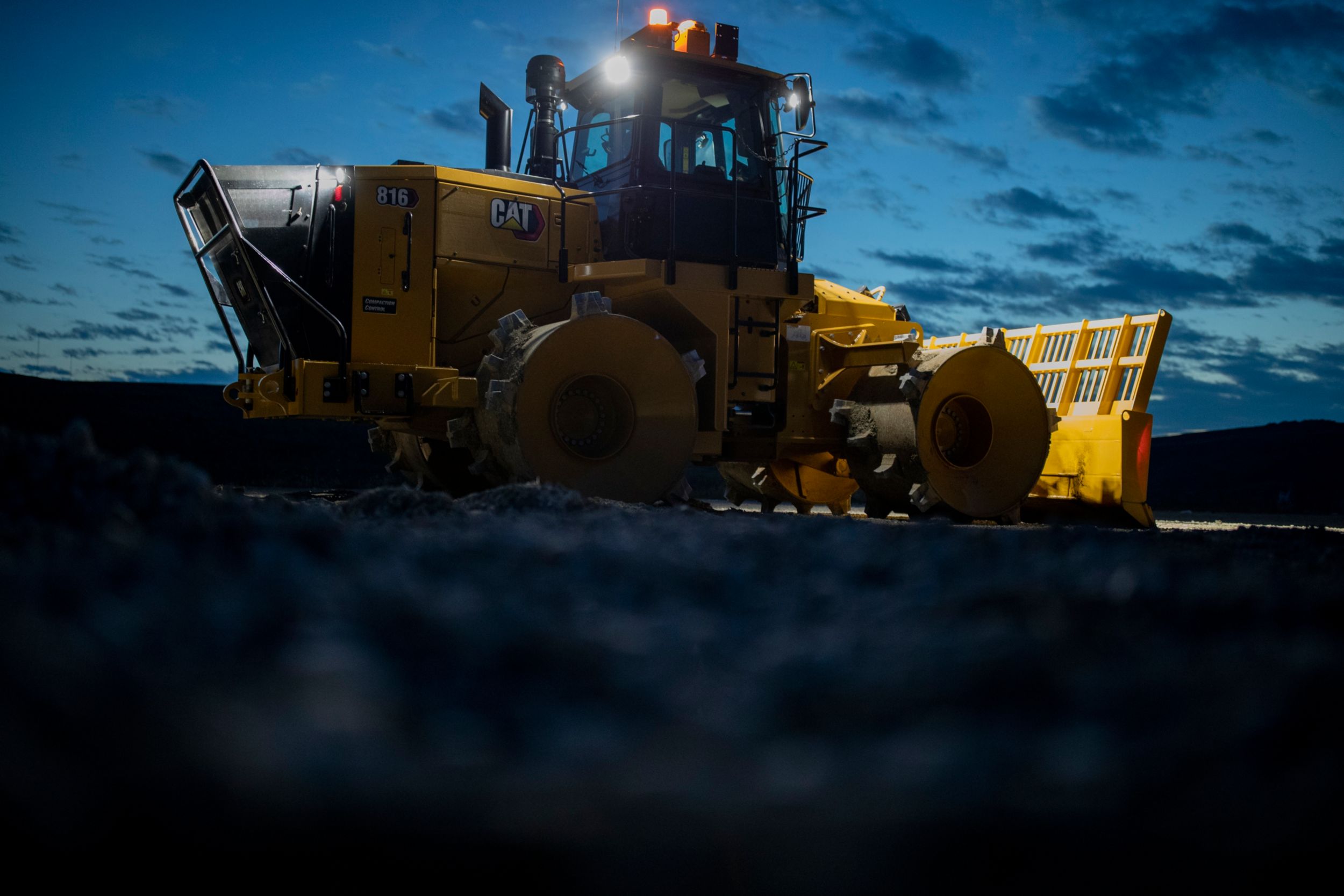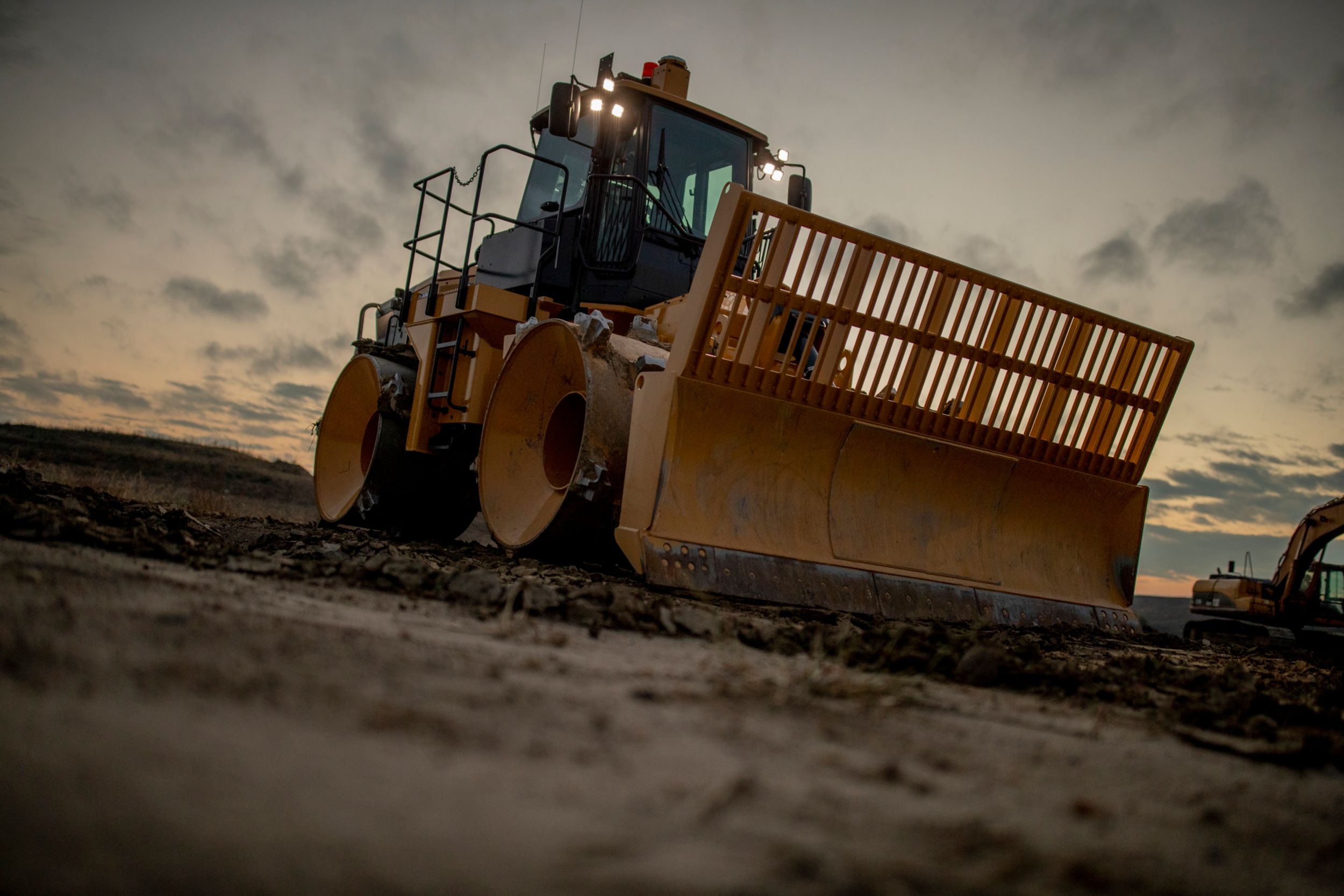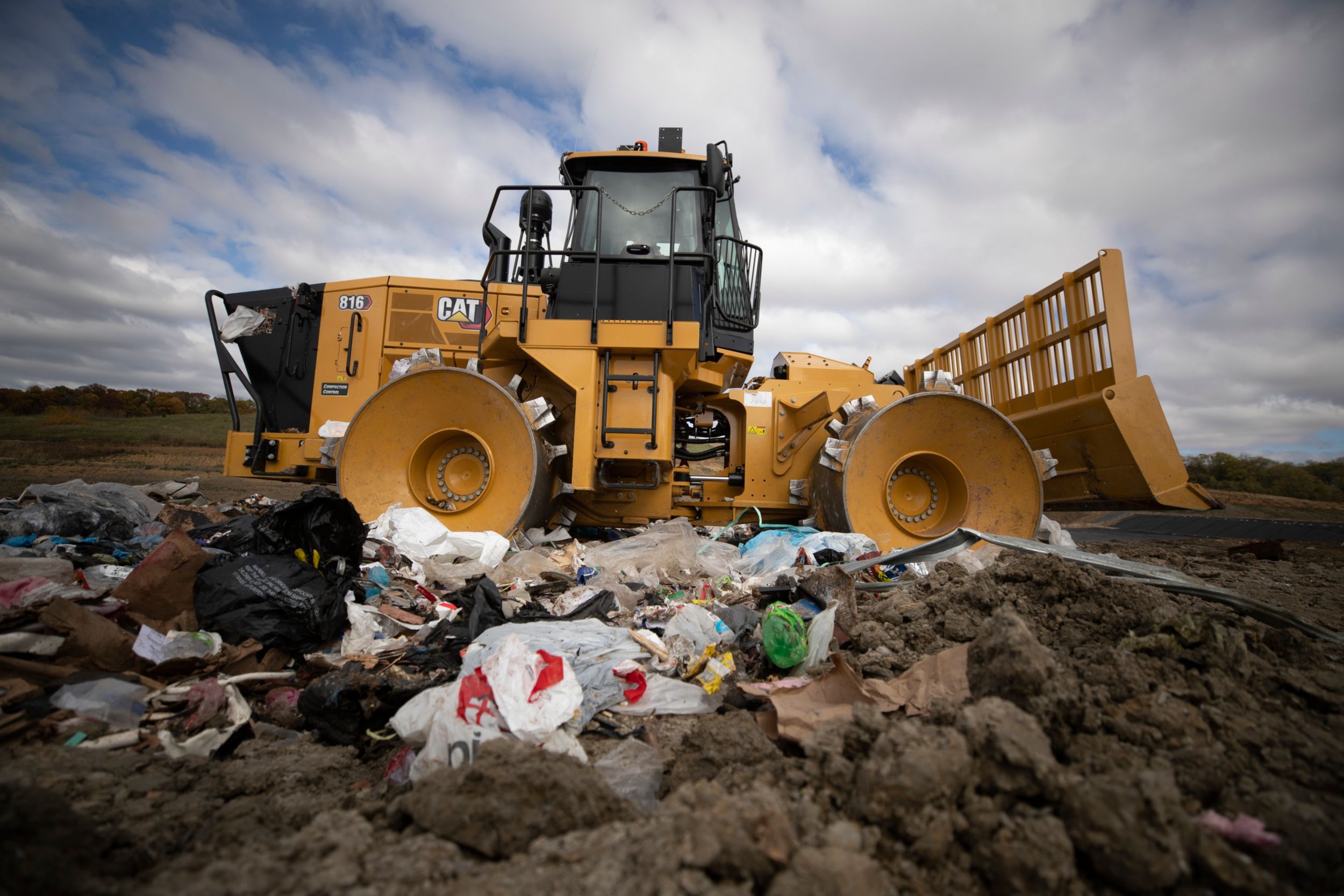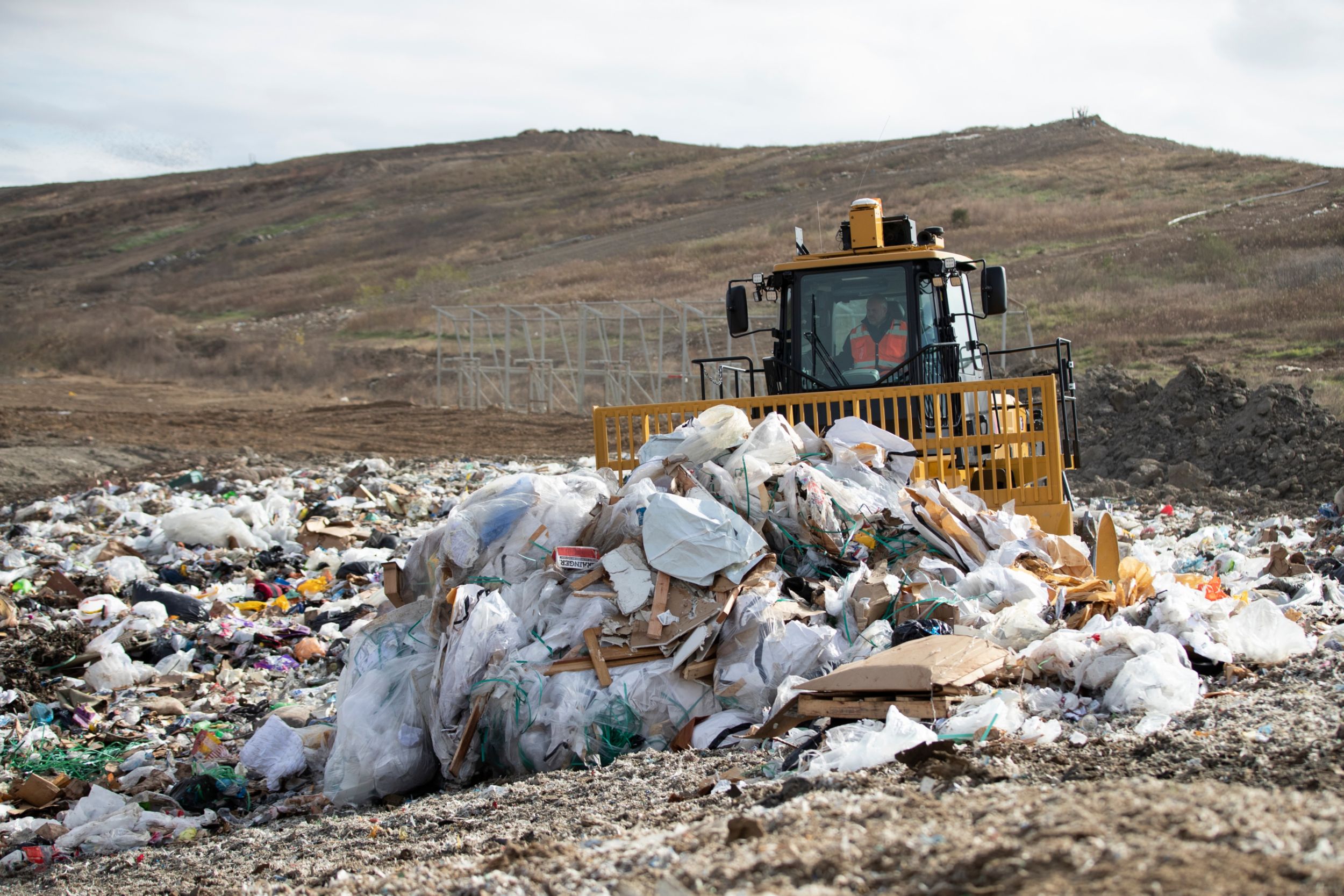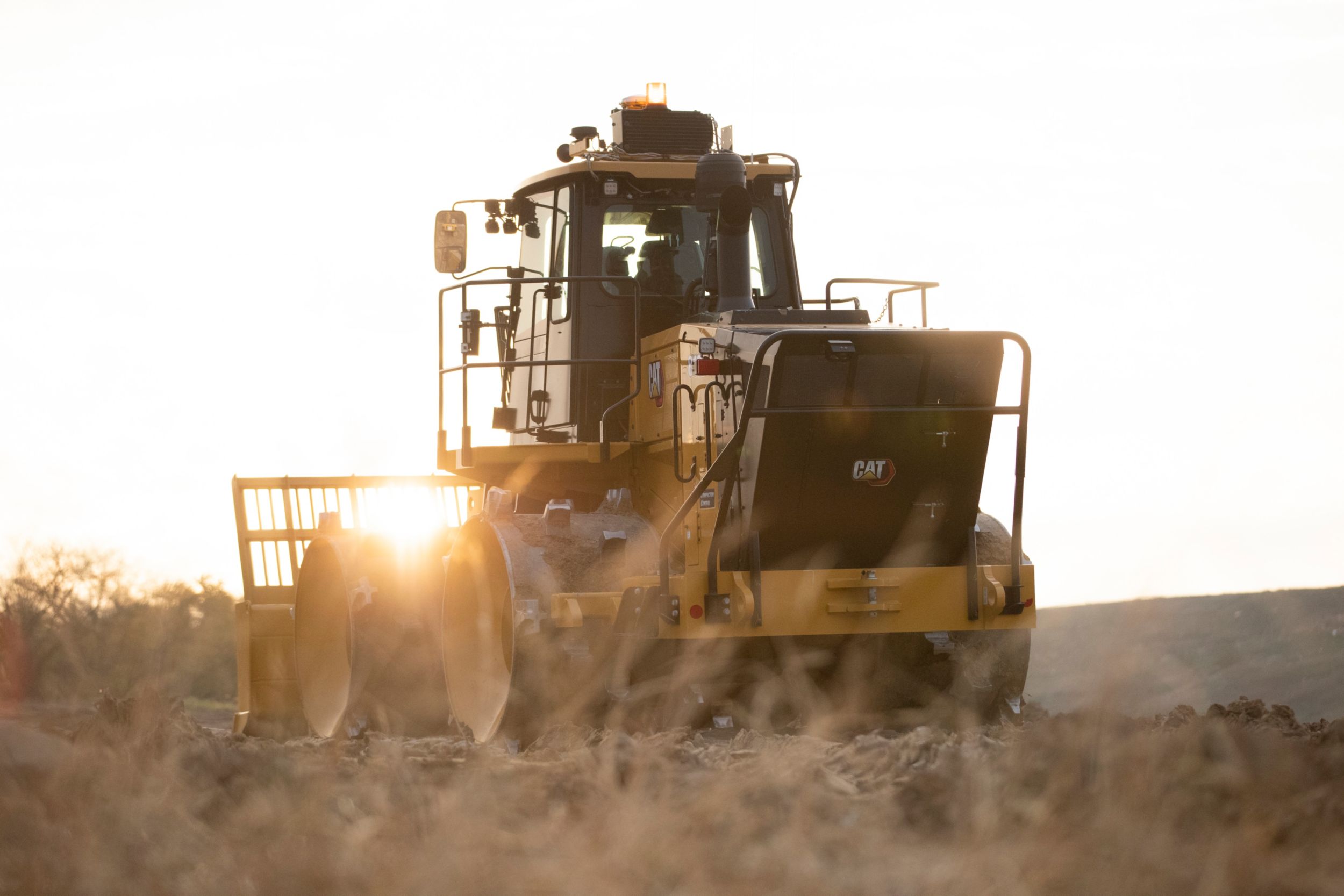
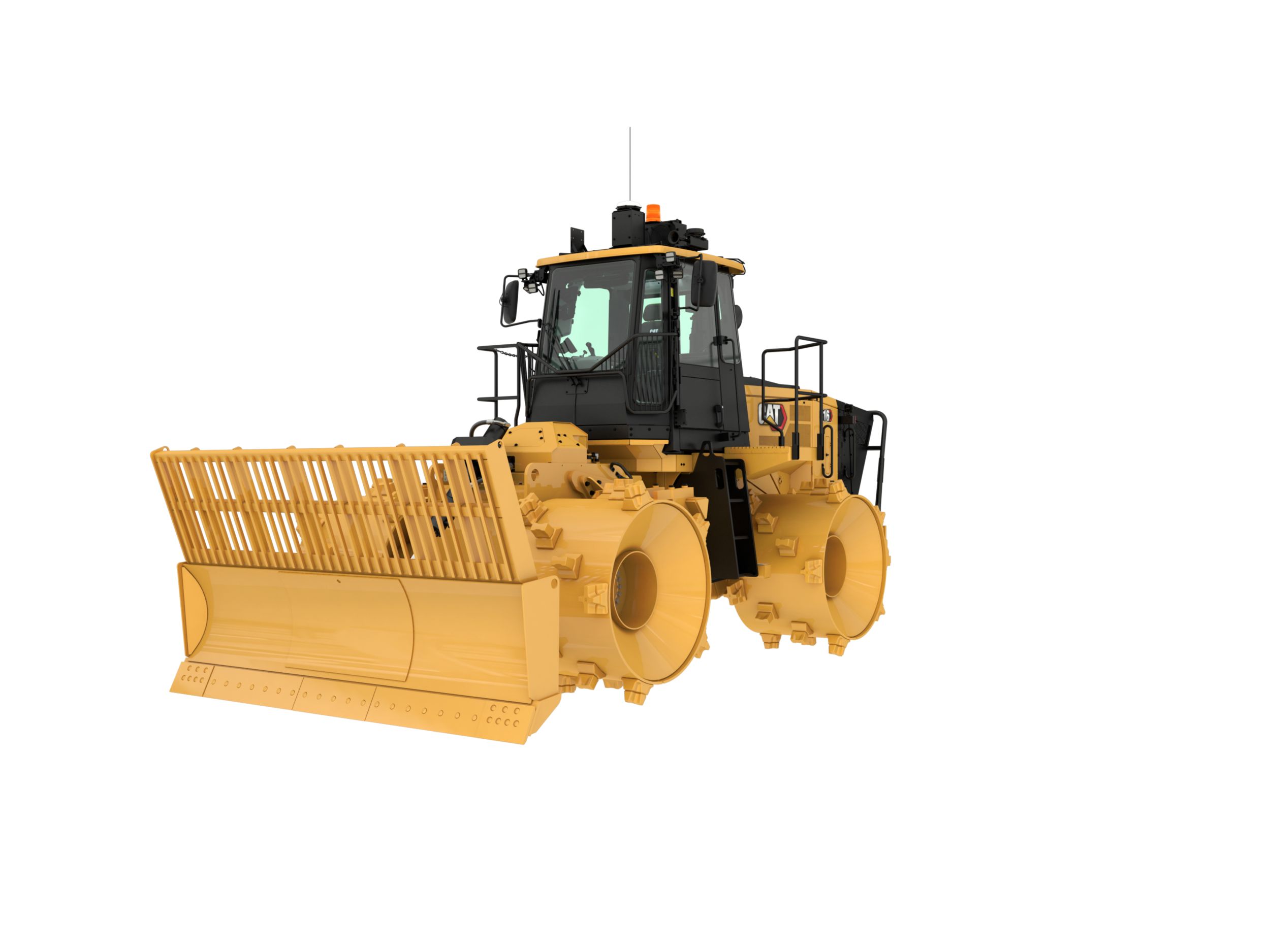
816 Landfill Compactor

Helping You Crush It

Purpose-built for landfill operation, the Cat 816 delivers features, performance and efficiency that come from over 50-plus years of industry leadership. Field-proven protection and integrated technologies provide peak availability and optimized landfill performance.

Cat Landfill Compactors are designed with durability built in, ensuring maximum availability through multiple life cycles. With optimized performance and simplified serviceability, our machines allow you to operate more efficiently and safely. Introduced in 1972, the 816 has been the industry leader for over 50 years. Focused on helping our customers succeed, we have continued to build upon each new series. The 816 continues our legacy of reliability, performance, safety, operator comfort, serviceability, and efficiency.
Equipment Highlights

OPERATOR COMFORT AND CONTROL
TOP-TIER SERVICE AND SUPPORT
POWERFUL EFFICIENCY
PRODUCTIVITY WITH TECHNOLOGY
WHEEL TIPS BUILT TO PERFORM

In-Stock at Hawthorne Cat

Video Library

Features + Specs

Equipment Features
Optional Equipment
Specs
  • Front: Planetary – Fixed
  • Rear: Planetary – Oscillating
  • Oscillation Angle: ±6°
  • Gross Power - SAE J1995:2014: 284 hp
  • Net Power - SAE J1349:2011: 249 hp
  • Net Power - ISO 9249:2007: 249 hp
  • Engine Power - ISO 14396:2002: 275 hp
  • Engine Model: Cat® C7.1
  • Emissions: Option 1 - U.S. EPA Tier 4 Final/EU Stage V/Korea Stage V and Japan 2014
  • Rated Speed: 2200
  • Peak Torque ( 1,400 rpm ): 902 lbf·ft
  • Torque Rise: 52%
  • Note: Net power advertised is the power available at the engine flywheel when the engine is equipped with a fan, air cleaner, aftertreatment, and alternator.
  • Emissions: Option 2 - Brazil MAR-1, emitting equivalent to U.S. EPA Tier 3/EU Stage IIIA
  • Rated Speed: 2200
  • Net Power - SAE J1349:2011: 249 hp
  • Net Power - ISO 9249:2007: 249 hp
  • Gross Power - SAE J1995:2014: 286 hp
  • Engine Power - ISO 14396:2002: 275 hp
  • Peak Torque ( 1,400 rpm ): 749 lbf·ft
  • Torque Rise: 26%
  • Note: Net power advertised is the power available at the engine flywheel when the engine is equipped with a fan, air cleaner, muffler, and alternator.
  • Bore: 4.1 in
  • Stroke: 5.3 in
  • Displacement: 427.8 in³
  • High Idle Speed: 2270 r/min
  • Low Idle Speed: 800 r/min
  • Maximum Altitude - Without Derating: 9842.5 ft
  • Combination Tips (Weight Group): 13554 lb
  • Plus Tips - Weight (Group): 13982 lb
  • Paddle Tips - Weight (Group): 13126 lb
  • Outside Diameter: 67.6 in
  • Drum Diameter: 55.1 in
  • Drum Width: 40 in
  • Tips per Row: 5
  • Tips per Wheel: 20
  • Replaceable: Weld On
  • Width Over Drums: 131.4 in
  • Tip Height: 6.25 in
  • Transmission Type: Cat Planetary Power Shift
  • Travel Speeds - Forward - First: 3.4 mile/h
  • Travel Speeds - Forward - Second: 5.3 mile/h
  • Travel Speeds - Reverse - First: 3.7 mile/h
  • Travel Speeds - Reverse - Second: 5.5 mile/h
  • Service Brakes: Single Disc Wet (Enclosed) 2 WHL
  • Parking Brake: Drum and Shoe, Spring Applied, Hydraulic Released
  • Capacity: 13.08 yd³
  • Overall Width: 12 ft
  • Height: 6.4 ft
  • Height of Cutting Edge: 3.2 ft
  • Digging Depth: 1.2 ft
  • Ground Clearance: 3.7 ft
  • Turning Radius – Outside Corner of Blade: 21.2 ft
  • Turning Radius - Inside Corner of Blade: 9.5 ft
  • Weight: 4548 lb
  • Total Operating Weight: 57345 lb
  • Air Conditioning: The air conditioning system on this machine contains the fluorinated greenhouse gas refrigerant R134a or R1234yf. See the label or instruction manual for identification of the gas. - If equipped with R134a (Global Warming Potential = 1430), the system contains 1.4 kg (3.1 lb) of refrigerant which has a CO2 equivalent of 2.002 metric tonnes (2.206 tons).
  • Height - Top of Beacon: 14.3 ft
  • Height to Top of Air Conditioning Condenser: 13.7 ft
  • Height - Cab Roof: 12.7 ft
  • Height - Top of Exhaust Pipe: 11.6 ft
  • Height - Top of Hood: 9.1 ft
  • Height to Top of Rear Compactor Guard: 8.2 ft
  • Ground Clearance to Hitch: 1.7 ft
  • Ground Clearance to Bottom of Bumper: 2.7 ft
  • Centerline of Rear Axle to Bumper: 6.5 ft
  • Centerline of Rear Axle to Rear Compactor Guard: 8.6 ft
  • Hitch to Centerline of Front Axle: 5.5 ft
  • Wheel Base: 11 ft
  • Width over Front Striker Bars: 9.8 ft
  • Width over Rear Striker Bars: 10 ft
  • Width over Platform: 10.3 ft
  • Width over Drums: 11 ft
  • Overall Machine Length with Straight Blade: 25.6 ft
  • Ground Clearance to Transmission Guard: 1.7 ft
  • Operating Weight (Tier 4 Final/Stage V): 57345 lb
  • Operating Weight (Tier 3/Stage IIIA equivalent): 56793 lb
  • Fuel Tank: 132.1 gal (US)
  • Diesel Exhaust Fluid Tank: 4.2 gal (US)
  • Cooling Systems - Tier 4 Final/EU Stage V: 21.4 gal (US)
  • Cooling System - Tier 3/Stage IIIA Equivalent: 19.3 gal (US)
  • Engine Crankcase: 5.3 gal (US)
  • Transmission: 14.8 gal (US)
  • Differential - Final Drives - Front: 11.4 gal (US)
  • Differential - Final Drives - Rear: 11.4 gal (US)
  • Hydraulic System - Implement/Steering: 46.2 gal (US)
  • Hydraulic Tank Only: 19.8 gal (US)
  • Note: Cat diesel engines are required to use ULSD (ultra-low sulfur diesel fuel with 15 ppm of sulfur or less) or ULSD blended with the following lower-carbon intensity fuels** up to: • 20% biodiesel FAME (fatty acid methyl ester) * • 100% renewable diesel, HVO (hydrotreated vegetable oil) and GTL (gas-to-liquid) fuels Refer to guidelines for successful application. Please consult your Cat dealer or “Caterpillar Machine Fluids Recommendations” (SEBU6250) for details. * Engines with no aftertreatment devices can use higher blends, up to 100% biodiesel (for use of blends higher than 20% biodiesel, consult your Cat dealer). ** Tailpipe greenhouse gas emissions from lower-carbon intensity fuels are essentially the same as traditional fuels. – Cat DEO-ULS™ or oils that meet the Cat ECF-3, API CJ-4, API CK-4, and/or ACEA E9 specifications are required. – Diesel Exhaust Fluid (DEF) that meets all requirements defined in ISO 22241-1:2006.
  • Steering System - Circuit: Pilot, Load Sensing
  • Steering System - Pump: Piston – Variable Displacement
  • Maximum Flow at 2,200 rpm: 38.8 gpm
  • Relief Valve Setting - Steering: 4003 psi
  • Total Steering Angle: 84°
  • Steering Cycle Times - High Idle: 3 s
  • Steering Cycle Times - Low Idle: 8.2 s
  • Lift/Tilt System - Circuit: Pilot operated LS valve with EH
  • Lift/Tilt System: Variable displacement piston
  • Maximum Flow at 2,200 rpm: 23.5 gpm
  • Relief Valve Setting - Lift/Tilt: 3190 psi
  • Cylinders, Double Acting: Lift, Bore, Stroke: 120 mm x 915 mm (4.7 in x 36.0)
  • Pilot System: Open center, fixed displacement gear
  • Pilot Relief Valve Setting: 3046 psi
  • Operator Sound Pressure Level (ISO 6396:2008): 72 dB(A)
  • Machine Sound Power Level (ISO 6395:2008): 112 dB(A)
  • Operator Sound Pressure Level (ISO 6396:2008)*: 70 dB(A)
  • Machine Sound Power Level (ISO 6395:2008)*: 110 dB(A)
  • Note (1): * Sound suppression equipped
  • Note (2): The machine sound power level was measured according to ISO 6395:2008. The measurement was conducted at maximum engine cooling fan speed.
  • Note (3): The operator sound pressure level was measured according to ISO 6396:2008. The measurement was conducted at maximum engine cooling fan speed.
  • Note (4): Hearing protection may be needed when the machine is operated with a cab that is not properly maintained or when the doors or windows are open for extended periods or in a noisy environment.
  • Operator Sound Pressure Level (ISO 6396:2008): 72 dB(A)
  • Machine Sound Power Level (ISO 6395:2008): 111 dB(A)
  • Operator Sound Pressure Level (ISO 6396:2008)*: 70 dB(A)
  • Machine Sound Power Level (ISO 6395:2008)*: 109 dB(A)
  • Note (1): * Sound suppression equipped
  • Note (2): The machine sound power level was measured according to ISO 6395:2008. The measurement was conducted at maximum engine cooling fan speed.
  • Note (3): The operator sound pressure level was measured according to ISO 6396:2008. The measurement was conducted at maximum engine cooling fan speed.
  • Note (4): Hearing protection may be needed when the machine is operated with a cab that is not properly maintained or when the doors or windows are open for extended periods or in a noisy environment.

Photo Gallery

Let us help you find what you are looking for.